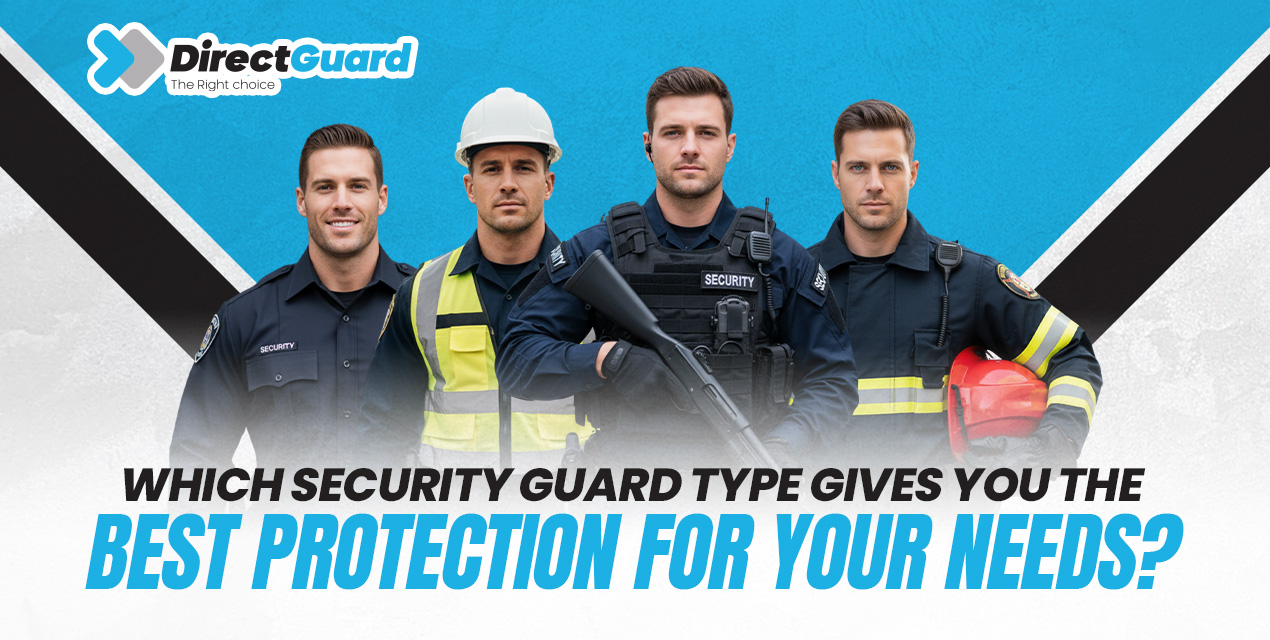
You know you need security—but with so many specialized roles, how do you choose?
Is an armed guard overkill for your office? Can an unarmed guard really stop a break-in? Do you need a fire watch security guard just because your sprinklers are off for maintenance?
The truth is: the “best” protection isn’t about the most weapons or the toughest uniform—it’s about matching the right professional to your specific environment, risks, and legal requirements.
In this guide, we’ll break down 21 distinct security guard types, explain exactly what they do, where they’re used, their training, limitations, and—most importantly—when they deliver the highest level of protection.
No fluff. Just clarity.
Different Types of Security Guards
1. Armed Security Guards
Who They Are:
Armed Security Guards are licensed professionals authorized to carry firearms, trained to protect high-risk areas, deter threats, respond to emergencies, and coordinate with law enforcement.
Key Duties:
- Patrol high-risk areas with visible or concealed firearm (per local law)
- Deter and, if legally justified, neutralize active threats
- Control access to restricted zones
- Respond to break-ins, assaults, or active shooter scenarios
- Coordinate with law enforcement during emergencies
Where They’re Used:
Banks, jewelry stores, armored transport, construction sites with high-value equipment, data centers, government facilities, remote industrial sites, and private estates in high-crime areas.
Best Protection When:
You face credible threats of violence or theft, operate during off-hours with minimal staff, or protect assets worth hundreds of thousands (or more). Their presence alone reduces crime by up to 60%.
Limitations:
Higher cost ($25–$50+/hour), stricter licensing, potential public intimidation, and increased liability if force is misused.
2. Unarmed Security Guards
Who They Are:
Unarmed Security Guards use observation, communication, and conflict resolution to maintain security and safety without weapons, focusing on deterrence and incident reporting.
Key Duties:
- Monitor premises via foot patrol or CCTV
- Verify IDs and manage visitor logs
- Report suspicious activity to police or supervisors
- Assist guests, give directions, manage queues
- De-escalate verbal disputes or disturbances
Where They’re Used:
Retail stores, corporate offices, schools, hospitals, shopping malls, hotels, and lobbies where a welcoming atmosphere is essential.
Best Protection When:
Your primary risks are shoplifting, trespassing, loitering, or minor disturbances—not armed threats. They enhance safety while supporting customer experience and brand image.
Limitations:
Cannot physically stop violent intruders; rely on calling police for serious incidents.
3. Mobile / Vehicle Patrol Security Guards
Who They Are:
Mobile / Vehicle Patrol Security Guards patrol multiple locations via vehicles, conducting scheduled or random checks to deter crime and provide flexible, cost-effective security coverage.
Key Duties:
- Conduct randomized or scheduled checks of perimeters, doors, windows, and lighting
- Respond to alarm activations
- Document property conditions (e.g., broken fences, graffiti)
- Provide “virtual presence” through frequent, unpredictable visits
Where They’re Used:
Apartment complexes, industrial parks, retail chains, vacant lots, and businesses needing cost-effective after-hours coverage.
Best Protection When:
You need broad-area deterrence without full-time on-site staff. Mobile patrols are 3–5x more affordable than static guards while still reducing vandalism and break-ins by 40–70%.
Limitations:
Not continuously present—gaps between patrols can be exploited by determined criminals.
4. Residential Security Guards
Who They Are:
Residential Security Guards protect gated communities and apartment complexes by controlling access, patrolling common areas, responding to disturbances, and coordinating with property management.
Key Duties:
- Monitor entry gates and verify resident/visitor access
- Patrol common areas (pools, gyms, parking garages)
- Respond to noise complaints or disturbances
- Coordinate with HOA or property management
Where They’re Used:
Gated communities, high-end condos, senior living facilities, and suburban neighborhoods with rising crime.
Best Protection When:
Residents demand privacy, safety, and rapid response to suspicious activity. They reduce package theft, car break-ins, and trespassing.
Limitations:
Effectiveness depends on community size and patrol frequency
5. Corporate Security Guards
Who They Are:
Corporate Security Guards offer professional security in office and business environments, focusing on access control, asset protection, visitor screening, and maintaining a safe workplace.
Key Duties:
- Screen visitors and manage badge access
- Monitor executive floors and server rooms
- Escort terminated employees
- Support cybersecurity by preventing tailgating or device theft
- Lead fire drills and evacuation procedures
Where They’re Used:
Office towers, tech campuses, financial firms, law offices, and R&D facilities.
Best Protection When:
You must protect intellectual property, executive safety, and brand reputation in a professional environment.
Limitations:
Less effective in high-crime outdoor areas unless paired with perimeter security.
6. Event Security Guards
Who They Are:
Event Security Guards manage crowd control, conduct bag checks, coordinate emergency responses, and protect VIPs at concerts, festivals, conferences, and other large public events.
Key Duties:
- Perform bag checks and metal detection
- Manage entry/exit flow to prevent bottlenecks
- Identify and remove intoxicated or aggressive attendees
- Create secure zones for performers or dignitaries
- Coordinate with police, EMTs, and fire marshals
Where They’re Used:
Concerts, festivals, conferences, sporting events, galas, and political rallies.
Best Protection When:
You’re managing large, unpredictable crowds where safety, liability, and guest experience are critical.
Limitations:
Require advance planning; not suitable for long-term static protection.
7. Retail Security Guards
Who They Are:
Retail Security Guards specialize in loss prevention by monitoring for shoplifting, employee theft, and suspicious activity, maintaining a safe shopping environment and deterring criminals.
Key Duties:
- Monitor for shoplifting, employee theft, or fraud
- Review surveillance footage
- Detain suspects (within legal limits) until police arrive
- Assist customers to maintain positive atmosphere
Where They’re Used:
Department stores, electronics retailers, pharmacies, and e-commerce return centers.
Best Protection When:
Shrinkage (theft) is impacting profits. A single guard can reduce losses by 30–50%.
Limitations:
Must follow strict legal protocols to avoid false imprisonment claims.
8. Government Security Guards
Who They Are:
Government Security Guards work in public buildings and government facilities, enforcing security protocols, screening visitors, maintaining order, and complying with regulatory requirements.
Key Duties:
- Screen visitors with X-ray/metal detectors
- Enforce building access policies
- Respond to protests or disruptions
- Maintain logs for compliance audits
Where They’re Used:
Courthouses, DMVs, city halls, military bases (perimeter), and public utilities.
Best Protection When:
You must balance public access with national or civic security under strict regulatory frameworks.
Limitations:
Bureaucratic hiring processes; less flexibility than private firms.
9. Hospital Security Guards
Who They Are:
Key Duties:
- Patrol ERs, psychiatric units, and parking lots
- Escort staff during night shifts
- Manage aggressive patients or visitors
- Secure medication storage and newborn nurseries
- Assist during code blues or disasters
Where They’re Used:
Hospitals, clinics, urgent care centers, and behavioral health facilities.
Best Protection When:
Safety involves human vulnerability—not just property. They prevent violence while preserving patient dignity.
Limitations:
Cannot use force on patients without medical authorization.
10. Construction Site Security Guards
Who They Are:
Construction Site Security Guards protect active job sites by preventing theft of equipment and materials, monitoring for trespassing, and enforcing safety regulations during construction.
Key Duties:
- Prevent theft of copper, tools, generators, and heavy machinery
- Monitor for trespassers or squatters
- Enforce safety perimeters (e.g., open trenches, cranes)
- Conduct fire watch during hot work
Where They’re Used:
Active job sites, equipment yards, infrastructure projects, and vacant developments.
Best Protection When:
Equipment theft costs the U.S. construction industry $1 billion annually. On-site guards cut losses dramatically.
Limitations:
Harsh working conditions; requires rugged, reliable personnel.
11. Executive Protection Security Guards (Bodyguards)
Who They Are:
Key Duties:
- Conduct advance site surveys
- Plan secure travel routes
- Provide 24/7 close protection
- Manage communications and emergency extraction
Where They’re Used:
For CEOs, celebrities, diplomats, judges, and high-net-worth individuals.
Best Protection When:
Your client faces credible threats, paparazzi harassment, or kidnapping risks. This is proactive, intelligence-driven security.
Limitations:
Very high cost ($75–$200+/hour); requires long-term planning.
12. Fire Watch Security Guards
Who They Are:
Fire Watch Security Guards are certified professionals who monitor fire hazards during system outages, conduct hourly patrols, maintain logs, and ensure compliance with fire safety regulations.
Key Duties:
- Perform hourly patrols of all floors and mechanical rooms
- Inspect for fire hazards (blocked exits, hot work, electrical faults)
- Maintain NFPA-compliant fire watch logs
- Activate alarms and evacuate if fire is detected
Where They’re Used:
Buildings with impaired sprinklers/alarms, construction zones, hospitals during renovations, and venues hosting hot work.
Best Protection When:
Your fire system is down—even temporarily. Required by law in most jurisdictions for outages >10 hours.
Limitations:
Narrow scope—only focused on fire risk, not general security.
13. Industrial Security Guards
Who They Are:
Industrial Security Guards secure high-risk industrial facilities, enforce safety protocols, monitor hazardous materials, prevent sabotage, and respond to emergencies within factories and plants.
Key Duties:
- Monitor chemical storage, power lines, and machinery
- Enforce safety protocols (hard hats, lockout/tagout)
- Prevent sabotage or espionage
- Respond to spills or leaks
Where They’re Used:
Factories, refineries, power plants, water treatment facilities, and warehouses.
Best Protection When:
A single breach could cause environmental disaster, explosion, or production shutdown.
Limitations:
Requires specialized industry knowledge.
14. Transportation Security Guards
Who They Are:
Transportation Security Guards protect transit hubs, cargo yards, and transportation infrastructure by monitoring access, inspecting vehicles, and preventing theft or tampering with shipments.
Key Duties:
- Patrol bus/train stations and cargo yards
- Screen employee vehicles
- Monitor for stowaways or tampering
- Secure aircraft on tarmacs (non-federal roles)
Where They’re Used:
Airports (perimeter), seaports, rail yards, and logistics centers.
Best Protection When:
You need to protect public transit safety or high-value shipments from theft or tampering.
Limitations:
Must coordinate closely with federal agencies.
15. Dedicated / Static / Stationary Security Guards
Who They Are:
Dedicated / Static / Stationary Security Guards remain at a fixed post to control access, monitor alarms and CCTV, and provide continuous security presence at critical points.
Key Duties:
- Control access at lobbies, gates, or control rooms
- Monitor CCTV or alarm panels
- Log all entries/exits
- Serve as first point of contact
Where They’re Used:
Data centers, bank vaults, front desks, and secure facilities.
Best Protection When:
You need unbroken attention at a critical access point. Human presence deters tailgating and unauthorized entry.
Limitations:
Limited mobility; can’t respond to incidents elsewhere.
16. Video Surveillance Operators
Who They Are:
Video Surveillance Operators remotely monitor live camera feeds across multiple locations, detecting suspicious activity and dispatching on-site security or emergency responders as needed.
Key Duties:
- Detect intrusions, fires, or falls via AI-assisted cameras
- Dispatch mobile patrols or on-site guards
- Archive footage for investigations
Where They’re Used:
Retail chains, warehouses, parking lots, and smart buildings.
Best Protection When:
You want eyes everywhere at a fraction of the cost of on-site guards. Best paired with physical patrols.
Limitations:
Cannot intervene physically; false alarms can reduce effectiveness.
17. Personal Security Guards
Who They Are:
Personal Security Guards provide dedicated protection to individuals, focusing on threat assessment, close protection, and quick response to ensure the safety of clients in various personal and professional settings.
Key Duties:
-
Escort clients during travel or public appearances
-
Monitor surroundings for suspicious activity
-
Coordinate with law enforcement or emergency services
-
Manage secure transportation and logistics
-
Protect against physical threats or harassment
Where They’re Used:
Celebrities, executives, VIPs, politicians, high-net-worth individuals, and clients facing personal threats or requiring discreet security.
Best Protection When:
You face personal safety threats like stalking, kidnapping, or harassment, and need close, proactive protection tailored to your lifestyle.
Limitations:
High cost and resource-intensive; requires trust and coordination with the client; limited to the individual, not suitable for property or crowd protection.
18. Private Security Guards
Who They Are:
Private Security Guards offer bespoke security services for private clients, focusing on safeguarding homes, businesses, or private events through personalized security plans and vigilant presence.
Key Duties:
-
Conduct property patrols and surveillance
-
Control access to private premises
-
Monitor security systems and alarms
-
Respond swiftly to security breaches or emergencies
-
Provide concierge-style security assistance
Where They’re Used:
Private estates, luxury residences, exclusive clubs, private parties, and corporate events requiring tailored security solutions.
Best Protection When:
You want flexible, discreet security customized for private property or events where public law enforcement presence is insufficient or inappropriate.
Limitations:
Costs vary widely; effectiveness depends on the quality of training and client-specific security planning; may require integration with other security measures.
19. Education Security Guards
Who They Are:
Education Security Guards protect educational institutions by managing access control, monitoring campus safety, responding to emergencies, and fostering a secure environment for students and staff.
Key Duties:
-
Patrol campus grounds and buildings
-
Enforce campus policies and safety regulations
-
Assist with emergency evacuations and lockdowns
-
Monitor for unauthorized visitors or suspicious behavior
-
Provide first aid or crisis intervention when needed
Where They’re Used:
Universities, colleges, high schools, vocational schools, and large educational campuses with diverse populations.
Best Protection When:
Maintaining a safe and welcoming campus atmosphere is crucial, with quick response to incidents and prevention of unauthorized access.
Limitations:
May have limited authority compared to police; balancing security and openness can be challenging; requires strong community engagement.
20. Airport Security Guards
Who They Are:
Airport Security Guards safeguard airport facilities by screening passengers, monitoring terminals, managing access points, and ensuring compliance with aviation security regulations.
Key Duties:
-
Screen passengers, baggage, and cargo
-
Monitor terminal security and restricted areas
-
Respond to security alerts and incidents
-
Coordinate with TSA and law enforcement agencies
-
Enforce airport safety and security protocols
Where They’re Used:
Commercial airports, private airports, heliports, and airport cargo facilities.
Best Protection When:
Ensuring passenger safety and preventing terrorism, smuggling, or other threats in a high-traffic, regulated environment.
Limitations:
Highly regulated environment with strict protocols; limited discretion in passenger handling; must coordinate with federal authorities.
21. Home / Apartment Security Guards
Who They Are:
Home / Apartment Security Guards provide residential security by controlling access, patrolling premises, responding to disturbances, and maintaining a safe living environment for residents.
Key Duties:
-
Monitor entrances and exits
-
Conduct regular patrols of common areas
-
Respond promptly to alarms and resident concerns
-
Enforce community rules and regulations
-
Liaise with property management and law enforcement
Where They’re Used:
Gated communities, apartment complexes, condominiums, and residential neighborhoods.
Best Protection When:
Residents require controlled access and quick response to incidents like theft, vandalism, or unauthorized visitors.
Limitations:
Effectiveness depends on staffing levels and patrol frequency; may not handle serious criminal incidents without police backup.
Conclusion
Choosing the right security guard for your needs is essential for creating a safe and secure environment. Whether you need an armed guard to deter serious threats or an unarmed security officer to manage crowds, each role serves a specific purpose.
By understanding these 21 types of security guards, their best use cases, and limitations, you’ll be able to make an informed decision that aligns with your unique requirements.